Tankless water heater installation in Riverside
A good tankless install is mostly planning. The unit is small, but the gas pipe, vent, drain and water connections around it decide how it performs for years.
A tankless water heater installation in Riverside covers much more than hanging a box on the wall. The plumber sizes the unit to your busiest hour of hot water use, picks a mounting spot with a legal vent route, confirms the gas pipe can carry the load, adds service valves so the unit can be flushed later, routes a condensate drain on high efficiency models, provides power for the controls, pulls the city permit and tests the system under real flow. Each of those steps shows up on the written quote. You see the full price before any work starts, and if a tank suits your house better, you'll hear that too.
Sizing the unit to the way you use hot water
Tank heaters are sold by gallons. Tankless units are sold by flow, in gallons per minute, at a given temperature rise. The plumber starts by asking what runs hot at the same time in your house. Two showers and the dishwasher is a common peak. A large tub filling while someone showers is a harder one.
Then comes the temperature rise. The unit has to lift the incoming water to your set point, and incoming water is colder in winter than in summer. A unit that keeps up easily in August can fall short in January if it was sized on the warm months. The plumber sizes for the cold end.
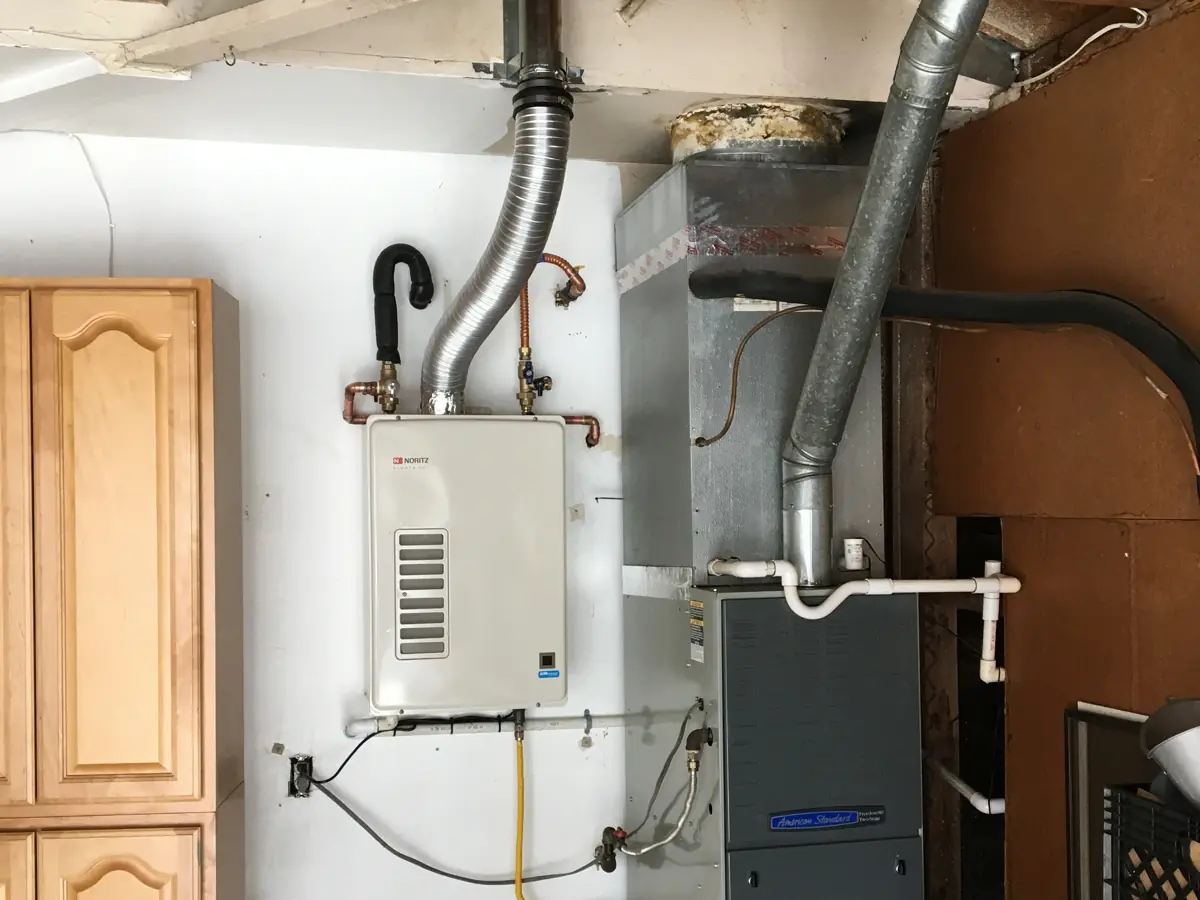
Choosing where it goes
The old tank's spot is often a fine place, but it isn't automatically the best. A tankless unit can mount on a garage wall, an outside wall with an approved cover, or inside the house if the model and vent allow it. Moving it closer to the bathrooms shortens the wait for hot water. Moving it farther from the gas meter can mean a longer, larger gas pipe. The plumber weighs those against each other with you.
Venting it safely
Each unit lists the vent materials and lengths it's tested with, and the Department of Energy's tankless guide says to use only venting listed for that unit. That rules out simply reusing a tank's metal flue in most cases. The vent also has to end a safe distance from windows, doors, air intakes and property lines. On a tight side yard, that clearance can decide the mounting spot.
Gas supply
A gas tankless burner fires hard for short periods. The plumber measures the pipe from the meter, counts the other gas appliances on it and checks pressure with everything running. If the existing pipe is too small, the quote includes the upgrade. Our gas line guide explains why this step matters so much.
Water connections and service valves
Isolation valves on the hot and cold lines let the unit be flushed without cutting water to the whole house. They turn a maintenance visit into a short job instead of a repiping project. With Riverside's hard water, skipping them is a false saving. A pressure relief valve is installed as the manufacturer and code require.
Condensate drain and power
High efficiency condensing models make acidic water as they pull heat from the exhaust, and it has to drain somewhere approved. The plumber plans that route, sometimes with a neutralizer. Most gas units also need an outlet nearby for the fan, ignition and controls.
Permit, start-up and walk-through
The City of Riverside requires a permit to replace a gas or plumbing system, and the finished install is inspected. At start-up the plumber checks gas pressure under full fire, temperature at the farthest tap and the unit's settings. Before leaving, they show you where the valves are, how the display reports problems and when the first flush is due.
Replacing an older tankless unit
If you already have tankless and it's failing, the job is simpler but not automatic. A new model may need a different vent size, have its gas inlet in another place or call for a condensate drain the old one didn't. The plumber compares both units' specifications before reusing anything.
What separates a good install from a callback
Most tankless problems in the first year trace back to a few shortcuts: a gas pipe that wasn't checked, a unit sized for summer water, a vent that doesn't follow the manual, or missing service valves that make descaling a chore. A careful install deals with each one up front. Ask the plumber how they'll handle all four, and look for them on the written quote.
In Riverside's hard water, maintenance also starts on day one. Ask when the first flush is due and how the unit will remind you. The descaling page explains the visit, and the conversion page covers taking out an old tank.
Talk it through with the plumber
Call (951) 376-3972 or request a callback.
You hear the options and the price before work starts.
Questions people ask
How long does a tankless water heater installation take?
A swap of one tankless unit for another can be short, while a first install that adds a gas line, a new vent and a condensate drain takes longer. ENERGY STAR also notes installers may need time to order the right model. The plumber gives you the expected schedule when they quote.
Where is the best place to mount a tankless water heater?
The best spot is usually close to the bathrooms and kitchen, on a wall that allows a short, legal vent run and has room for service access. In many Riverside homes that's a garage wall or an outside wall near the old tank. The plumber weighs vent length, gas pipe route and drain access before picking it.
What size tankless water heater do I need for a family of four?
Size depends on how many fixtures run hot at once and how much the unit must warm the incoming water, not on the number of people. ENERGY STAR lists a shower at about 2.5 gallons per minute and a clothes washer at 3.3, so two showers plus a washer adds up fast. The plumber does that math on your house.
Can a tankless water heater go inside a closet?
An indoor closet can work for some models if the vent, combustion air and clearances the manufacturer lists can all be met. A sealed, direct vent unit is often chosen for indoor spots. The plumber checks the closet size, the path to outside and the drain before saying it fits.
Do I need a plug near my tankless water heater?
Most gas tankless units need electricity for the controls, ignition and fan, so an outlet near the unit is usually required. ENERGY STAR lists power near the unit as one of the things an installer checks. If there isn't one, the quote should say how it will be added.
What is included in a tankless installation quote?
A complete quote names the unit, the vent materials and route, any gas pipe changes, the condensate drain, the water connections and service valves, permit handling and haul away of the old heater. Ask for it in writing, as ENERGY STAR suggests, so you can compare like with like before you agree.
Will a new tankless unit fit where my old tankless was?
A newer unit often fits the same wall, but the vent size, gas inlet position and condensate needs can differ between models and brands. The plumber compares the old and new specifications so the old vent isn't reused where the new unit's manual calls for something else.